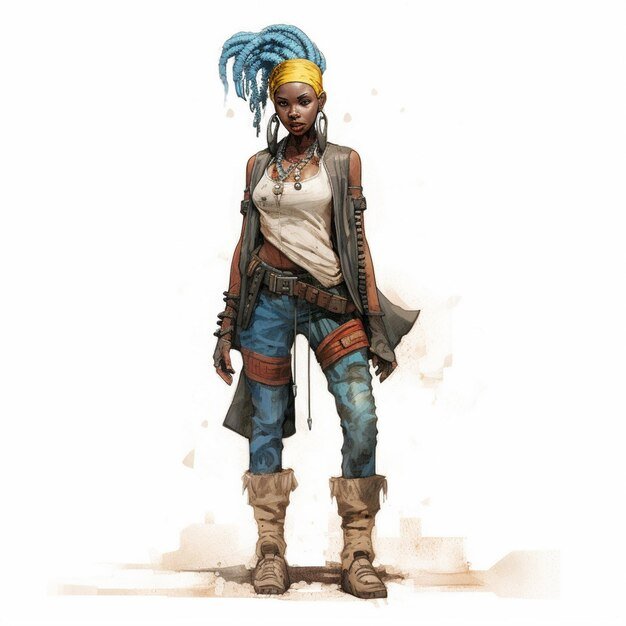
In the vibrant world of digital storytelling, few elements hold as much power as a well-crafted character. Whether for film, games, or comics, bringing a personality to life on screen or page is an intricate dance of art and engineering. When it comes to Animation Techniques and Female Character Design, the stakes are even higher. We’re not just drawing pretty faces; we're crafting compelling narratives, shaping perceptions, and creating figures that resonate deeply with audiences across the globe. This isn't just about aesthetics; it's about authenticity, impact, and the sheer joy of creation.
At a Glance: Crafting Unforgettable Female Characters
- Personality Drives Design: Every visual choice, from posture to costume, should reflect your character's inner world and backstory.
- Master the Fundamentals: Solid understanding of basic forms, anatomy, and color theory is your bedrock, even for highly stylized designs.
- Embrace Animation Principles: Techniques like squash & stretch or anticipation aren't just for movement; they imbue characters with life and emotional depth.
- Design for the Medium: What works for a comic might need adaptation for a video game or a full animated feature.
- Avoid Stereotypes: Strive for diversity and authenticity to create genuinely relatable and inspiring figures.
- Iterate, Iterate, Iterate: Character design is a process of constant refinement. Don't be afraid to experiment and get feedback.
Beyond the Obvious: Why Thoughtful Female Character Design Truly Matters
For decades, female characters in media often fell into predictable archetypes: the damsel in distress, the hyper-sexualized hero, or the one-dimensional love interest. But the digital landscape has blossomed, and with it, a demand for rich, complex, and memorable female figures that break these molds. This isn't just about "political correctness"; it's about crafting better stories.
Think about it: a well-designed female character can inspire, challenge, reflect, and entertain in ways that generic or stereotypical designs simply cannot. They drive plots, become fan favorites, and, critically, they offer diverse representation that allows more people to see themselves reflected in the stories they consume. The impact is profound, reaching audiences young and old, shaping cultural narratives, and even influencing aspiring creators. This emphasis on thoughtful design has become a cornerstone for studios worldwide, understanding that the best characters are those who feel real, no matter how fantastical their world.
The Art and Science of Female Character Design: Building from Within
Great characters aren't just drawn; they're built from the ground up, with a deep understanding of what makes them tick. This involves a blend of artistic skill and psychological insight.
Foundation First: Basic Forms, Anatomy, and the Power of Proportion
Before you can break the rules, you need to understand them. Every character, regardless of how stylized, begins with fundamental shapes and a grasp of anatomy. This isn't about perfectly proportioned realism, but rather knowing why certain shapes evoke specific feelings. A triangle might suggest dynamism, a circle softness, a square stability.
Understanding human anatomy provides a framework, even when designing a sci-fi alien or a cartoon creature. It helps you ensure joints bend correctly, weight feels natural, and poses convey intended meaning. For female characters specifically, this means understanding diverse body types, proportions, and how they contribute to a character's overall impression. It moves beyond a generic "hourglass" and encourages you to consider how a character's physical form supports her personality, role, and capabilities. A strong, athletic character will have different proportions and muscle definitions than a whimsical, scholarly one. This foundational knowledge is crucial for creating designs that are believable and visually coherent, whether she's leaping across rooftops or quietly contemplating a mystery.
Infusing Life: Psychology & Personality as Your Creative North Star
What drives your character? What are her fears, hopes, and quirks? The UNAM's "Introducción al Diseño Digital de Personajes" workshop rightly emphasizes the "Psicología y Personalidad de los Personajes" as a core module, highlighting how deeply a character's inner world influences her visual design.
Imagine a character who is shy and introverted versus one who is bold and boisterous. Their posture, clothing choices, even their color palette will naturally differ. A shy character might hunch slightly, favor muted tones, or have protective layers of clothing. A bold character might stand tall, wear vibrant colors, or have dynamic, expressive features. Her personality should be evident even in a silhouette. Do her clothes facilitate her actions or hinder them? Does her hairstyle suggest meticulous care or carefree spontaneity? Every visual decision becomes a window into her soul, making her relatable and memorable. This is where you create a character designed to tell a story and connect with an audience, as suggested by the Udemy course.
The Expressive Toolkit: Color, Clothing, and Telling Gestures
Once you have a grasp of a character's core, you begin to layer on the details that make her unique.
- Color Theory: Beyond just aesthetics, colors communicate. Warm tones like reds and oranges can suggest passion or aggression, while cool tones like blues and greens might convey calm or mystery. A limited, harmonious palette can make a character iconic, while contrasting colors can highlight specific traits or emotional states. For instance, a character with a generally calm demeanor might have a single splash of vibrant color in her accessory, hinting at a hidden spark.
- Clothing as Storytelling: Clothing isn't just about covering a character; it's a powerful narrative device. Does she wear practical armor, flowing robes, futuristic tech-wear, or distressed everyday clothes? Her attire speaks volumes about her culture, profession, social status, and even her personal journey. Think about how a character's costume evolves throughout a story, reflecting growth or change.
- Expressions and Body Language: These are the non-verbal cues that bring a character to life. The UNAM workshop includes "expression" as a key knowledge area, and for good reason. A character's eyes, eyebrows, mouth, and the tilt of her head can convey a vast range of emotions without a single word. Similarly, body language—the way she stands, walks, gestures—should be consistent with her personality and current mood. Mastering these details is what transforms a drawing into a living, breathing entity.
Mastering Animation Techniques for Dynamic Female Characters
Designing a compelling female character is one thing; bringing her to dynamic, fluid life through animation is another. This requires an understanding of movement, timing, and how to create the illusion of weight and emotion.
Bringing Drawings to Life: Principles of Animation in Action
The "Principles of Animation" are the fundamental laws of motion that govern all animated characters, and they are crucial for creating lively, unique, and memorable figures. As the Udemy course highlights, applying these principles is central to professional animation.
- Squash and Stretch: This principle gives a sense of weight and flexibility. When a character jumps, she squashes down before stretching up, creating a feeling of energy and impact. For female characters, this adds believability to movement, whether it’s a powerful superhero landing or a graceful dancer performing.
- Anticipation: A character often makes a preparatory action before a main action (e.g., pulling back before throwing a punch). This warns the audience what's coming and makes the movement feel natural and impactful.
- Staging: Clearly presenting an idea so it is unmistakable to the audience. This applies to character poses, expressions, and the overall composition of a scene, ensuring your female character's actions and emotions are always legible.
- Timing: The number of drawings or frames for an action dictates its speed. Slow timing can imply weight, difficulty, or a thoughtful action, while fast timing suggests lightness, speed, or surprise. Understanding timing is critical for conveying the nuances of a female character's personality through her movements.
- Exaggeration: Pushing actions and expressions for greater impact and clarity, without sacrificing believability. A wide smile or a dramatic gasp can enhance a character's emotional delivery.
- Solid Drawing: While perhaps less a "principle of motion," this foundational skill ensures your character maintains volume, weight, and balance in every pose. It means understanding perspective and anatomy so your character doesn't flatten out or lose consistency from frame to frame.
Applying these principles ensures that your female characters don't just move, but perform, conveying emotion and intent with every gesture.
Drawing in Motion: Volume, Dynamism, and the 360° View
Animation isn't about drawing one picture after another; it's about understanding how forms move through space. Udemy's emphasis on "drawing in motion for volume and dynamism" speaks directly to this.
When designing for animation, you need to consider how your character's body parts will move relative to each other and how their volume will be maintained from different angles. This often involves simplified, clear shapes and understanding how they deform and rotate. A character's hair, for example, might have secondary motion, lagging slightly behind the head's movement, adding to the dynamism.
Furthermore, a critical step in professional design is ensuring the character looks consistent and appealing from every angle. This is where the "360° view animation for design testing" comes in. Creating turnarounds—drawings of your character from front, side, back, and often three-quarter views—is essential. These model sheets serve as a blueprint, guiding animators and ensuring that the character's design remains cohesive and recognizable, no consistent with their template creation for comics and animation. This rigorous testing prevents visual inconsistencies and helps solidify the character's design, preparing her for the demands of animation.
Adapting Your Character for Any Medium: A Chameleon's Craft
A character designed for a static comic panel has different requirements than one built for an interactive video game or a fluid animated film. The "Diseño de Personajes para Diferentes Medios" module from the UNAM workshop underscores this crucial adaptability.
Animation: Fluidity, Expressiveness, and the Art of Movement
For animated films or series, the primary focus is on how smoothly and expressively your character moves. This means:
- Simplification: Complex details can be difficult and costly to animate consistently. Designers often simplify clothing patterns, hair strands, or accessory details without losing the character's essence.
- Rigging Considerations: If the character will be 3D animated, you need to think about joint placement, mesh topology, and how the character will deform. The design should anticipate the animators' needs, ensuring that arms and legs don't "break" during extreme poses.
- Exaggerated Expressions: Animation often thrives on expressive faces. Designing a wide range of distinct facial expressions that can be easily animated is key to conveying emotion effectively.
Video Games: Playability, Readability, and the Player's Experience
Designing for video games adds layers of interactivity and technical constraints:
- Silhouette Recognition: In fast-paced gameplay, players need to instantly recognize their character (and opponents) by their silhouette alone. A distinct and legible shape is paramount.
- Readability at Different Scales: Characters need to look good and be readable whether they are a tiny sprite on a screen, a zoomed-in close-up, or a detailed model during a cutscene.
- Lore and Equipment Integration: Clothing and accessories in games often serve a functional purpose, indicating abilities, status, or lore elements. This needs to be integrated seamlessly into the design.
- Technical Limitations: Polygonal counts, texture sizes, and animation budgets can impact design choices. A character's complexity might be scaled back to ensure optimal performance across various platforms.
Comics & Illustration: Static Impact and Dynamic Posing
In static media like comics and illustrations, every single panel or image needs to convey maximum impact:
- Strong Posing: Since there's no movement, each pose must be powerful, clear, and communicate action or emotion explicitly. Dynamic lines of action are crucial.
- Composition: How the character is framed within the panel, and how she interacts with the background, is vital for storytelling.
- Expressive Details: Fine details in facial expressions, hair, and clothing can be emphasized more, as they don't need to be animated repeatedly. Each drawing is a complete work of art.
The adaptability of your character's design for different mediums ensures her story can be told effectively, no matter the platform.
From Concept to Canvas: The Design Process Demystified
Creating a character isn't a single stroke of genius; it's a methodical, iterative process. The journey, often spanning months for complex projects, moves from vague ideas to polished, animation-ready blueprints.
Idea & Conceptualization: Where Stories Begin
Every memorable character starts with an idea. This initial phase, detailed in the Udemy course, involves brainstorming, research, and sketching.
- Define Her Role: Is she a hero, a villain, a mentor, a comedic relief? What is her purpose in the story?
- Core Personality & Backstory: Who is she? Where did she come from? What does she want? Even a few bullet points can anchor her design.
- Mood Boards: Gather visual references—clothing, hairstyles, architecture, nature, colors, other characters—that evoke the feeling and aesthetic you're aiming for. This helps in "conceptual tests applying animation principles and comic techniques."
- Thumbnails & Silhouettes: Quickly sketch many small ideas. Focus on distinct silhouettes first. If a character isn't recognizable by her outline, she won't be memorable in a crowd.
This initial exploration is about quantity over quality, generating as many possibilities as possible before narrowing down.
Conceptual Tests, Iteration, and the Power of Feedback
Once you have a few promising concepts, it's time to test them. This iterative process is crucial.
- Sketching in Different Poses: How does your character look when she's angry, sad, running, or standing still? Can she maintain her identity across various actions?
- Playing with Proportions and Shapes: Try variations. What if she's taller? Shorter? More angular? Rounder? These tests help solidify her visual language.
- Color Studies: Experiment with different color palettes. How does a change in color affect her perceived personality or mood?
- Seek Constructive Criticism: Show your work to peers, mentors, or your target audience. Fresh eyes can spot issues you've overlooked. Be open to feedback; it's how designs improve.
Character design is not about getting it perfect on the first try. It’s about refining, adjusting, and enhancing until the character truly embodies her purpose.
Building Your Character Template: The Blueprint for Success
Once a design is approved, the next step is to create a comprehensive template or model sheet, a key component of the Udemy course. This is the definitive guide for animators, sculptors, and other artists who will work with your character.
- Character Turnarounds: Front, back, side, and often three-quarter views, ensuring consistent proportions and details from every angle.
- Expression Sheets: A range of facial expressions (happy, sad, angry, surprised, confused, etc.) to guide emotional performances.
- Pose Sheets: Key poses that define the character's movement style and personality. For female characters, this can range from powerful action stances to subtle, contemplative gestures.
- Hand and Foot Studies: Detailed drawings of how hands and feet look from various angles and in different positions.
- Costume Details: Close-ups of specific clothing elements, props, or accessories.
- Color Palette Reference: Swatches of all approved colors, often with hex codes or Pantone references for consistency.
This template ensures that your character remains consistent throughout the entire production, no matter how many artists touch her. It is the consolidation of knowledge through a complete final character design project, as noted in the UNAM curriculum.
Common Pitfalls and How to Avoid Them in Female Character Design
Even experienced artists can fall into common traps. Being aware of these can help you sidestep them.
The "Same Face Syndrome": A Call for Diversity
One common issue, especially among less experienced artists, is drawing every female character with essentially the same face, just with different hairstyles or accessories. This results in characters that feel generic and lack individuality.
How to avoid it:
- Study Facial Anatomy: Understand the underlying bone structure and muscle groups that create different facial shapes.
- Exaggerate Features: Play with nose shapes, eye sizes, jawlines, and brow structures. One character might have a strong, angular jaw, another a softer, rounder one.
- Reference Real People: Look at the incredible diversity of human faces. Don't just draw from other anime or cartoon styles.
Stereotype Traps: Beyond the Generic
Falling back on tired stereotypes for female characters (e.g., the hyper-sexualized warrior, the timid librarian, the nagging mother) not only makes your character less interesting but also risks alienating your audience.
How to avoid it:
- Subvert Expectations: If you start with a trope, actively try to twist it. What if the timid librarian is actually a secret agent?
- Focus on Individuality: Build a unique backstory and personality first, then let the visual design flow from that, rather than starting with a visual stereotype.
- Ask "Why?": If you're designing a character in a revealing outfit, ask yourself why. Is it integral to her character, her powers, or her story, or is it merely for superficial appeal? Does it serve her story, or just a trope?
- Seek Diverse Feedback: Get opinions from people of different backgrounds and genders.
Form Over Function: The Impractical Design
Sometimes, a design looks amazing on paper but makes no sense for the character's intended actions or environment. For example, a battle-ready character with impractical heels, or a stealth operative with clunky, noisy armor.
How to avoid it:
- Consider Her Role: What does your character do? Her design should facilitate her actions. If she's a fighter, her clothing should allow for full range of motion. If she's an explorer, it should be durable and practical.
- Environmental Impact: Does her design make sense for the world she inhabits? A character in a desert environment won't wear heavy furs.
- Test Poses: As mentioned with the 360° view, try to draw your character in action poses. Can she realistically achieve them?
Lack of Personality: A Beautiful Shell
A visually stunning character can still fall flat if she lacks a distinct personality. She might look great, but if she doesn't feel like a person, she won't connect with the audience.
How to avoid it:
- Develop a Backstory: Even a brief one can provide depth.
- Give Her Quirks: Small, unique habits or mannerisms can make a character feel real.
- Show, Don't Tell: Instead of saying she's brave, design her actions and expressions to demonstrate her bravery. Her design should hint at her inner world, as discussed in the psychology module of the UNAM workshop.
By proactively addressing these common pitfalls, you can create more robust, believable, and ultimately, more beloved female characters. For those keen to deepen their skills and dive into the nuances of All About Animated Girls, understanding these common challenges is an invaluable first step.
Your Path to Becoming a Character Design Pro
The journey to mastering character design and animation is ongoing, but immensely rewarding. Whether you're a budding enthusiast or a seasoned artist looking to hone your skills, there are clear steps you can take to advance.
Essential Skills and Tools for Digital Character Creation
To start creating characters, you'll need the right tools and a foundational understanding:
- Basic Drawing Knowledge: A grasp of perspective, proportion, and line work is fundamental.
- Digital Tablet & Pen: A Wacom, Huion, XP-Pen tablet, or an iPad with an Apple Pencil is indispensable for digital art.
- Software Proficiency: Programs like Adobe Photoshop, Illustrator, Procreate (for iPad), Medibang Paint, or Krita are industry standards for 2D design. For 3D, software like Blender, ZBrush, or Maya are common. Familiarity with at least one of these is key.
- Creative & Technical Skills: The UNAM workshop targets building these skills across narrative, technical, and creative domains for character creation.
Structured Learning: Workshops and Courses
Formal education can significantly accelerate your learning curve. Workshops like the UNAM's "Introducción al Diseño Digital de Personajes" offer structured paths:
- Comprehensive Modules: The UNAM workshop covers five modules, from basic concepts and character psychology to design techniques and media adaptation, culminating in a final character design project. This provides a holistic approach to the craft.
- Expert Instruction: Learning from experienced professionals, such as Jesús Enrique Gil De María y Campos (known for his work with Cartoon Network), offers invaluable insights and feedback. These instructors often share real-world workflows and industry best practices.
- Practical Application: Such courses emphasize hands-on exercises and personal projects, allowing participants to build a professional portfolio right from the start.
This particular UNAM workshop, running from February 23, 2026, to May 11, 2026, on Mondays from 19:00 to 22:00 hours, offers 30 hours of online instruction at a basic level, making it accessible to a wide audience. The cost is $3,480.00 M.N. for national participants and $4,524.00 M.N. for foreign participants, demonstrating an investment in professional development.
Building Your Professional Portfolio
Your portfolio is your calling card. It should showcase your best work and demonstrate your range, storytelling ability, and understanding of character design principles.
- Focus on Storytelling: Each character in your portfolio should tell a story. Show her in different poses, expressions, and perhaps even in a mini-narrative sequence.
- Diversity is Key: Include a variety of character types, body shapes, ages, and artistic styles. This demonstrates versatility.
- Show Your Process: Include sketches, iterations, and turnaround sheets. This shows potential employers or clients your thought process and professionalism.
- Personal Projects: Work on projects you're passionate about. These often produce your strongest work and truly reflect your unique voice.
Professional Opportunities Await
Graduates with strong character design and animation skills are highly sought after in a variety of industries:
- Video Game Industry: Creating character models, textures, and concepts for interactive experiences.
- Animation and Cinema: Designing lead characters, supporting cast, and background elements for films and series.
- Comics and Illustration: Developing characters for graphic novels, webcomics, and editorial illustrations.
- Advertising and Branding: Crafting memorable mascots and characters for marketing campaigns.
- Freelance: Offering your specialized skills to a diverse range of clients and projects.
The demand for talented character designers who can create meaningful, engaging, and diverse characters continues to grow, opening up a world of creative possibilities.
Ready to Animate Your Vision? Start Designing!
The journey of creating memorable female characters through thoughtful design and dynamic animation techniques is both an art and a science. It demands technical skill, creative vision, and a deep understanding of storytelling and human psychology.
Don't be intimidated by the complexity; embrace the process. Start with the fundamentals, study the masters, and—most importantly—practice consistently. Draw, sketch, animate, iterate, and tell stories that matter to you. The digital canvas is waiting for your unique voice and your next unforgettable creation. The world is ready for more characters that inspire, challenge, and connect, and you have the power to bring them to life.